Mount Fuji : Eternal Majesty in the Heart of Japan
Mount Fuji, the emblem of Japan, stands majestically in the heart of the archipelago, capturing the imagination of locals and visitors for centuries. This iconic volcano, also known as "Fuji-San", is a revered national symbol, representing the natural beauty and deep spirituality of the Land of the Rising Sun.
Geography and Training
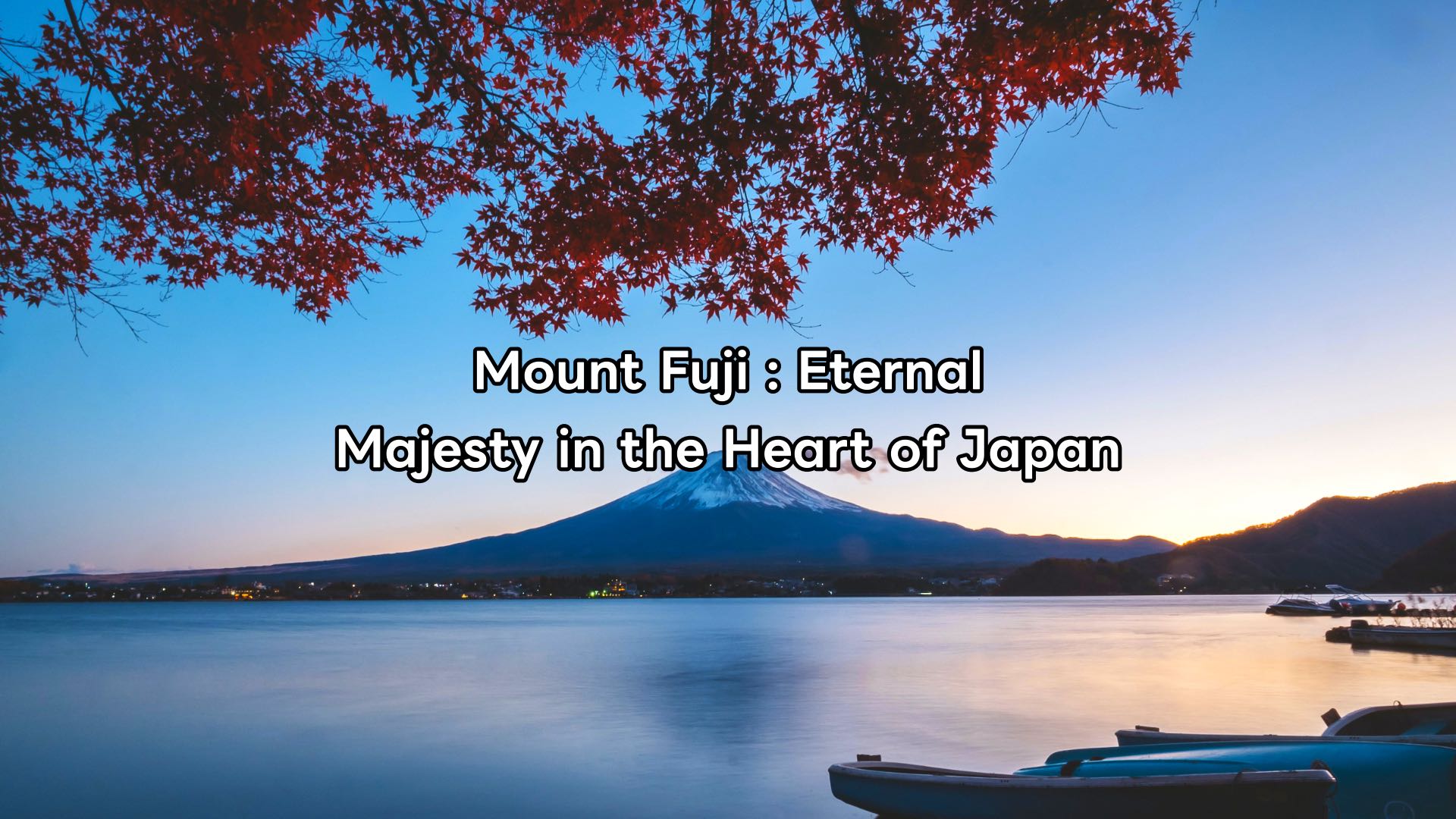
Located on the island of Honshu, just 100 kilometers southwest of Tokyo, this sacred mountain is the highest point in Japan, rising to a towering height of 3,776 meters. Classified as a stratovolcano, it is surrounded by five lakes, including lake Kawaguchi and lake Yamanaka, contributing to its majestic aura and unique biodiversity. Its perfect silhouette and its summit, often crowned with snow, make it an iconic image, both peaceful and powerful.
The geological formation of Mount Fuji dates back thousands of years. It is the product of multiple volcanic eruptions, the last of which dates back to the beginning of the 18th century. The entire region is steeped in the tumultuous history of these eruptions, with lava flows and rock formations that bear witness to the volcano's natural power.
A Sacred and Spiritual Site
Mount Fuji is deeply rooted in Japanese spirituality. It has been considered a sacred mountain since time immemorial. The first sanctuaries and temples dedicated to him were built more than a thousand years ago. Shintoism, Japan's indigenous religion, considers this ancestral volcano a sacred place of worship, associating it with deities and natural spirits.
Pilgrimages to its summit have long been a spiritual tradition. Once reserved for ascetics and monks, these pilgrimages have become popular among modern visitors seeking the unique spiritual experience of Mount Fuji. Mountain-related beliefs are also reflected in classical Japanese art and literature, where this legendary volcano is often depicted as a central motif.
A Source of Artistic Inspiration
Mount Fuji has inspired countless Japanese and foreign artists over the centuries. “Ukiyo-e” prints, a style of Japanese art popular during the Edo period, are full of depictions of this spiritual mountain. Iconic artist Katsushika Hokusai created the series of prints titled “Thirty-Six Views of Mount Fuji,” including the famous “The Great Wave off Kanagawa.” These works of art helped popularize the image of this snow-capped mountain around the world.
Its presence in contemporary artistic culture is equally remarkable. Photographers, filmmakers and writers continue to draw inspiration from its beauty and legends to create works that capture the public imagination. Its imposing silhouette, its mystical lakes and its remarkable biodiversity are inexhaustible sources of inspiration.
Tourism and Hiking
Mount Fuji attracts millions of visitors each year, both spiritual pilgrims and outdoor enthusiasts looking for adventure. The most popular time of year to climb it is summer, when the weather conditions are milder. Well-maintained trails, like the Yoshida trail, allow hikers to climb the volcano and watch the sunrise from the summit, an experience known to be transcendent.
The five lakes surrounding it also offer opportunities for relaxation and recreation. Visitors can sail the calm waters of lakes Motosu, Shoji, Sai, Kawaguchi and Yamanaka, stroll along their banks, or simply enjoy the breathtaking views from the various observation points.
Environmental Challenges
Despite its timeless beauty, Mount Fuji faces environmental challenges. Human activity, climate change and increasing tourist numbers are putting the mountain and its fragile ecosystems under pressure. Conservation efforts are underway to protect the region's biodiversity and preserve its natural beauty for future generations.
Mount Fuji remains an undisputed icon of Japan, capturing the essence of natural beauty, spirituality and art. Its iconic silhouette continues to inspire and fascinate, making this sacred mountain a national treasure and a must-see destination for travelers around the world.
Published on 12/01/2023 16:00:00
Which Kanjis Have You Learned ?
Click and Drag Translations
富士山
-
Mount Fuji
Biodiversity
火山
-
Volcano
Mount Fuji
湖
-
Lakes
Summit
頂
-
Summit
Lakes
生物学
-
Biodiversity
Volcano

The History of Rice in Japan : From Grain to Culinary Tradition
Rice occupies a special place in the history of Japan, both in terms of food and culture. This small grain has played a central role in the lives of the Japanese, shaping their diet, their economy and even their identity. Its history is a fascinating saga that dates back millennia, and its impact is deeply rooted in Japanese society.

The Rapid Evolution of Japanese Trains : From Historic Lines to Innovative Projects
Japan, renowned for its advanced technology, has played a leading role in the evolution of trains over the decades. From the commissioning of the first railway in 1872, to the design of ultra-modern high-speed lines, the Land of the Rising Sun has constantly pushed the boundaries of railway engineering.

The Tradition of Hanami : Celebrating the Ephemeral Beauty of Cherry Blossoms
Hanami, or the Japanese tradition of gazing at cherry blossoms, is a celebration of the fleeting beauty of nature. This centuries-old custom has deep meaning in Japan, where cherry blossom trees, called "sakura", are revered for their short-lived splendor. Every year, when spring arrives, millions of Japanese and visitors from around the world gather there to enjoy this extraordinary natural spectacle.