The Rapid Evolution of Japanese Trains : From Historic Lines to Innovative Projects
Japan, renowned for its advanced technology, has played a leading role in the evolution of trains over the decades. From the commissioning of the first railway in 1872, to the design of ultra-modern high-speed lines, the Land of the Rising Sun has constantly pushed the boundaries of railway engineering.
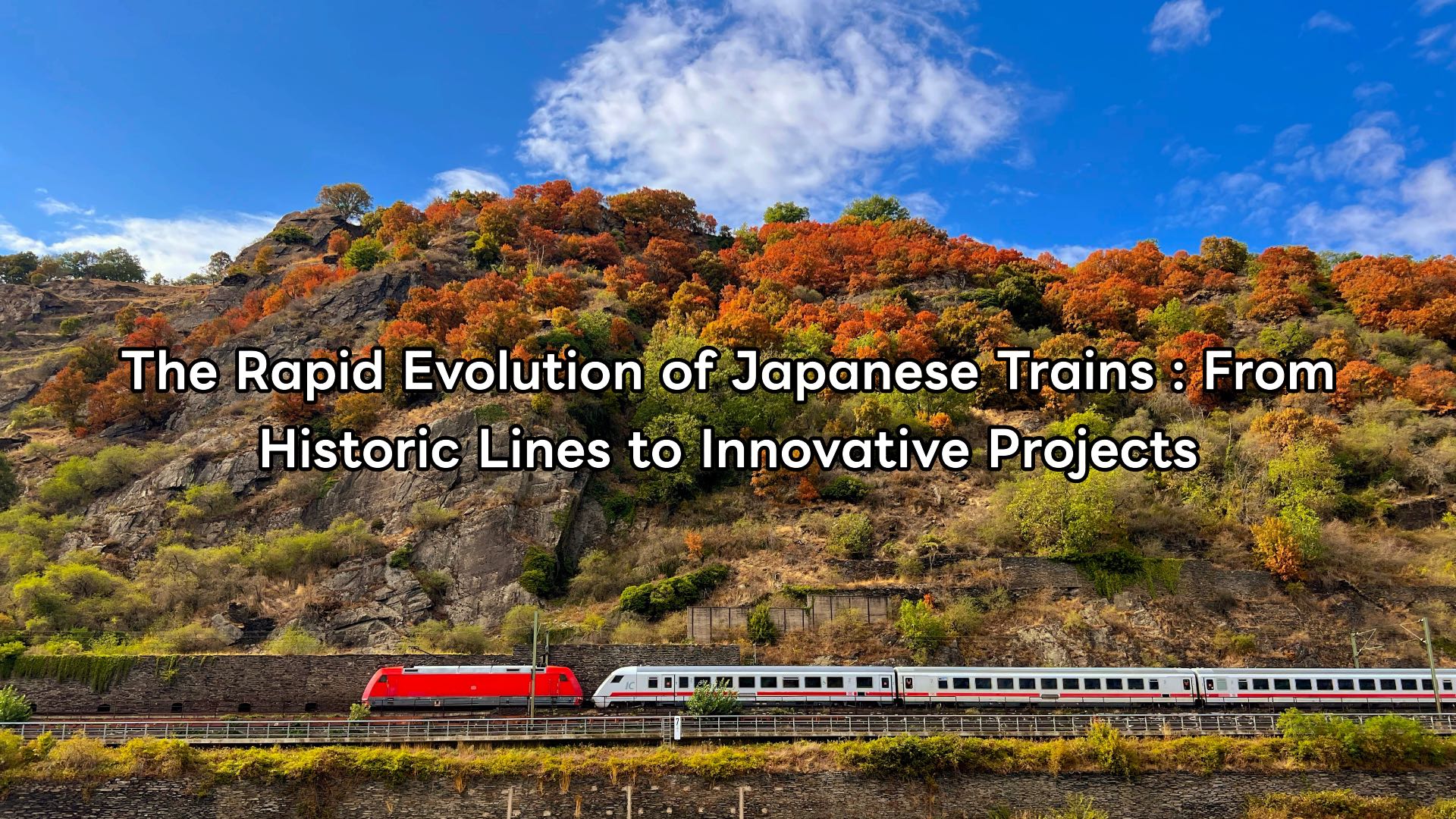
The Era of the First !Trains
The history of Japanese trains dates back to the Meiji era (1868 to 1912) when the first carriage, pulled by a steam locomotive imported from Great Britain, traveled the Tokyo-Yokohama line in 1872. At that time, the rail network was mainly limited to connections between major cities. However, growing demand for transportation quickly led to network expansion, with the introduction of electric models in the early 20th century.
Electrified !Trains and Network Growth
During the Showa era, (1926 to 1989) Japan experienced rapid urbanization and an increase in population, leading to increased demand for efficient public transportation. It was around this time that electric trains began to dominate the railway landscape, providing a fast and reliable alternative to older steam versions. Large cities like Tokyo and Osaka have seen the emergence of suburban rail networks, facilitating daily travel for workers.
Innovation was also present in train design, with the introduction of Japan's first high-speed line, the Shinkansen, in 1964. Also known as the "bullet train", it connected Tokyo with Osaka at the revolutionary speed of 220 km/h, marking the start of a new era in Japanese rail transport.
The !Shinkansen Revolution
The Heisei era (1989-2019) witnessed continued innovation in Japanese rail transportation. The Shinkansen has been expanded to new lines, covering the entire country and providing a fast and comfortable alternative to air travel. High-speed technology was perfected, further reducing travel times and establishing the Shinkansen as one of the most advanced rail systems in the world.
At the same time, efforts have been made to make journeys more environmentally friendly. The introduction of electric-powered bullet trains has helped reduce greenhouse gas emissions, part of Japan's vision for a sustainable future.
Futuristic Projects and Artificial Intelligence
Recent years mark an important milestone in the history of Japanese trains, with an increased emphasis on technological innovation. Futuristic projects aim to push the limits of speed and punctuality even further. Japan is working on the development of magnetic levitation trains, (Maglev) capable of exceeding the current speeds of the Shinkansen, which nevertheless travels at nearly 320 km/h today.
The integration of artificial intelligence into railway systems is another emerging trend. Sophisticated algorithms are used to optimize schedules, maintenance and security, improving overall network efficiency. These technological advances help position Japan at the forefront of global rail innovation.
The history of Japanese trains is a captivating saga of innovations. From humble beginnings with steam locomotives to bullet trains and futuristic projects, Japan has consistently pushed the boundaries of railway engineering. Today, they are not only means of transportation, but also symbols of Japanese advanced technology. As the country continues to explore new frontiers with magnetic levitation trains and artificial intelligence, it's clear that their evolution is far from over, promising an ever faster, more convenient, and more sustainable future.
Published on 11/24/2023 16:00:00
Which Kanjis Have You Learned ?
Click and Drag Translations
電車
-
Trains
Speed
輸送
-
Transportation
Trains
革新
-
Innovation
Shinkansen
速度
-
Speed
Innovation
新幹線
-
Shinkansen
Transportation

The History of Rice in Japan : From Grain to Culinary Tradition
Rice occupies a special place in the history of Japan, both in terms of food and culture. This small grain has played a central role in the lives of the Japanese, shaping their diet, their economy and even their identity. Its history is a fascinating saga that dates back millennia, and its impact is deeply rooted in Japanese society.

The Tradition of Hanami : Celebrating the Ephemeral Beauty of Cherry Blossoms
Hanami, or the Japanese tradition of gazing at cherry blossoms, is a celebration of the fleeting beauty of nature. This centuries-old custom has deep meaning in Japan, where cherry blossom trees, called "sakura", are revered for their short-lived splendor. Every year, when spring arrives, millions of Japanese and visitors from around the world gather there to enjoy this extraordinary natural spectacle.

Mount Fuji : Eternal Majesty in the Heart of Japan
Mount Fuji, the emblem of Japan, stands majestically in the heart of the archipelago, capturing the imagination of locals and visitors for centuries. This iconic volcano, also known as "Fuji-San", is a revered national symbol, representing the natural beauty and deep spirituality of the Land of the Rising Sun.